Search This Blog

Showing posts with label JICA. Show all posts

Thursday, February 25, 2021

Why JICA Scholarship ?

So today, I just wanna share my thought about "Why JICA Scholarship?" 
As you know that I have written here about JICA scholarship, you can check the old blog here. 

Here, you can read my another opinion about it that has been written in the brochure as follow: 


 I encourage you to take the opportunity if there is a JICA scholarship offering. Especially JICA  Development Studies Program : SDGs Global Leadership Program for the civil servant throughout Indonesia. Why I encourage you to take this opportunity? 

The answer is because you will get so many opportunities. Before I explain detail about it. Let's check first what does JICA scholarship cover? 

JICA Scholarship covers : 
  1. Tuition Fees 
  2. Living Allowance 
  3. Airfare Tickets
  4. Outfit Allowance 
  5. Moving Allowance 
  6. Research Support Allowance (RSA)
  7. Visa Fee
Tuition Fees
Tuition fee will be paid directly to our University. 

Living Allowance 
144.000 yen. It will be used for dormitory fee and also our monthly spending. I could save monthly. 

Airfare Tickets 
The ticket will be facilitated by JICA (return ticket). I still remember we took the ANA (All Nippon Airways) when we went to Japan and we took JAL (Japan Airlines) when we returned to Indonesia. 

Outfit Allowance 
100.000 yen for outfit allowance. In my case, I bought the winter outfit in Indonesia, because when I arrived in Japan, it was already winter time. So, I did not have to buy winter outfit again in Japan.

Moving Allowance 
From the first year to last year, I stayed in dormitory.  But, we can move out from the dorm. If we stay off campus, we will be given moving allowance. Because I did not move out from dorm, there was no moving allowance for me. 

Research Support Allowance (RSA)
RSA is given annually (30.000 yen monthly). I can say that RSA is the best part of this scholarship. I attended International conference in Greece which is supported by RSA in 2019. You can see my video here. Unfortunately, due to pandemic in 2020, there was no more international conference. So, how we spent the RSA in 2020? Yup, lucky us, our University and JICA allowed  us to spend it on books. That's why I bought the books (any book I wanted to read).

Visa Fee 
JICA will cover visa fee.

Above all, in my personal experience, why JICA Scholarship is the best, they do not set the high standard for GPA. In other words, there is no special requirement from JICA for the GPA we have to obtain in university. The requirement is just from the University itself. So, we have to meet minimum requirement GPA based on the program we take into in University.  

Additional Information 
JICA Center 
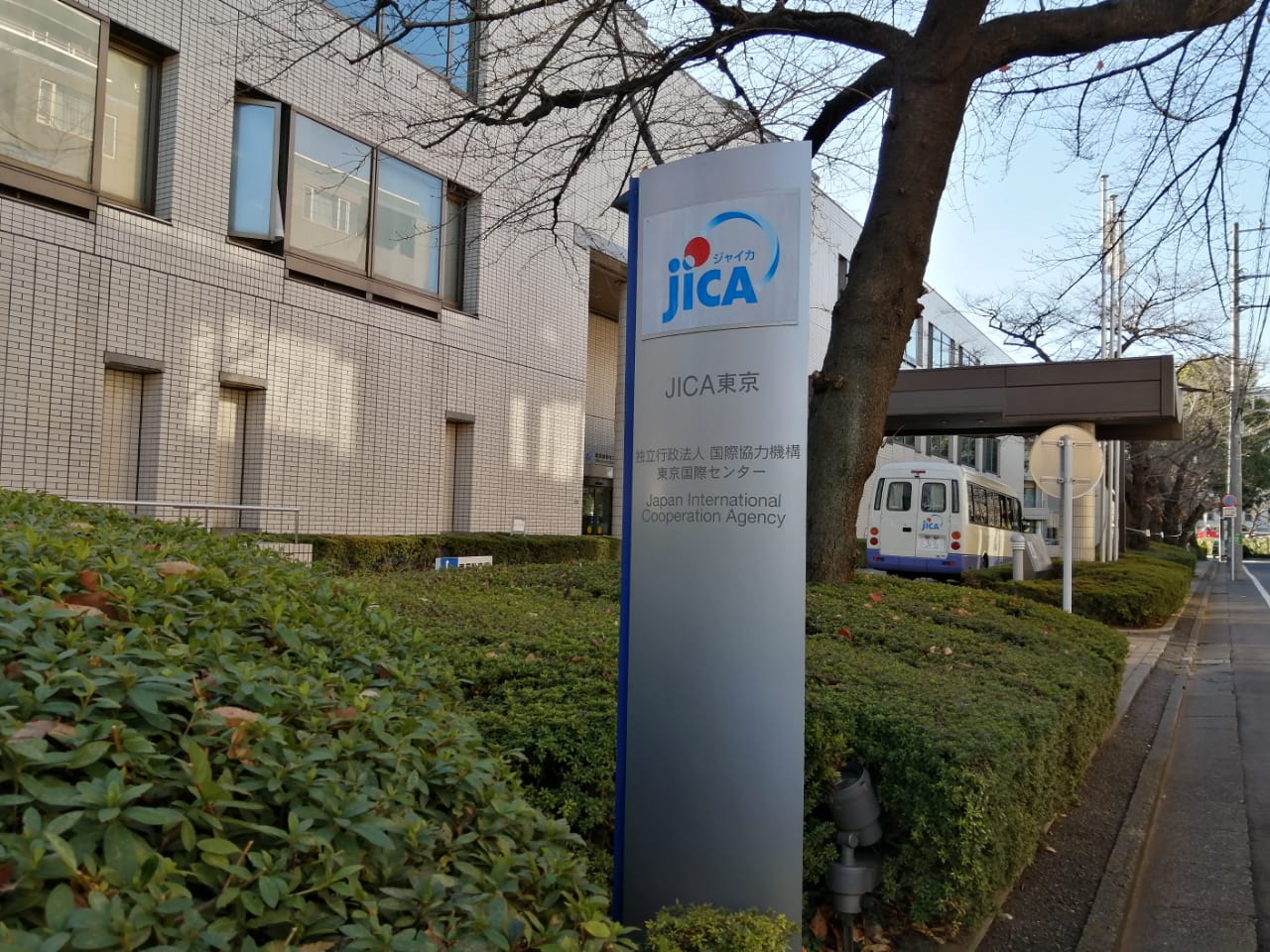
JICA center in Tokyo 
I stayed in Minamiuonuma shi, Niigata. So, if there was meeting/gathering I had to go to JICA center in Tokyo. We stayed in JICA center. We can also stay here for holiday. We have to book the room here and pay by ourselves. I like to stay here very much. I felt comfortable. It is just like a hotel. 


JICA Scholar Gathering (Networking)

One of another benefits of being a part of JICA Scholarship is networking. JICA regularly will host a networking event. JICA will facilitate this meeting. There are also "lecture on specific theme". We can learn a lot from this meeting. 
JICA Scholars from Indonesia" Arief san, Cep Kiki san, Me, Mas Ben and 

Field Trip
The unforgettable memory for me is when we visited Nagasaki. The historical city due to Atomic Bomb. 
My article about Nagasaki Trip 


I wrote the article about Nagasaki and published it on commercial magazine (Vol. 39/2019, MyTrip Magazine). 

That's all for me. 

Good luck for you all who are pursuing education and scholarship. 

Monday, October 12, 2020

About Japan from Our Discussion Result

 A couple days ago (at the end of August) I had Joint Program 2020 webinar. This webinar is held for JICA scholars. This program aims for offering participants opportunities to learn additional knowledge such as innovation and leadership, and build a network with other JICA participants as well as Japanese public institutions/private companies. 

The objectives of the joint program are: 

  1. To deepen understanding as JICA participants, share some important points to continue scholarship program, and strengthen networking among themselves. 
  2. To promote Cross-Cultural understanding.
  3. To gain Japanese social culture and business manner.
  4. To learn about Innovation and Leadership through lectures and workshops.
  5. etc.   
What  I want to share here is about my group discussion result. Yup, there was a group discussion. I joined group B (one of the targets is SDGs Global Leader Program-my scholarship program). For group B, we are divided again into groups. I was in group ten with other participants. I remembered one of five participants. He is from Salvador.  The group discussed about three questions as follow: 

Question 1 
What kind of system/service/mindset do you want to take away from Japan to your country? 

Answer:
  • From Japanese Industry: the mindset about collaboration between the owner and the worker (work relationship or collaboration culture). The Japanese company very concerns about long term relationship with workers. They see it as human capital. In the Japanese industries, they will not only compete, but also work together in order to develop R&D.
  • The structure of Japanese industry:  the well structured industries make easier to develop the productivity. Hardworking sense, even it's difficult to adapt or take this quality out is difficult (high motivation is needed) Not giving up is also important attitude feature (continue working despite of the struggles). The serving nature of Japanese people, the way that Japanese consider the costumer feeling, and try to make feel good in any situation. 
  • The transportation is very organized and functual. 
  • Mechanization of agriculture.
  • Health facility system. 
  • Human resources focus: how education system is structured and how Japan keep motivated people to train and improve human capabilities. 
  • The service industry: standardization of food and hospitalities in various service sectors. 
  • The garbage collection system is very well-organized. Each city is committed and concern about recycling infrastructure and keep cities clean. Reducing pollution, environment becomes better for living. 
  • The mail delivery system is very functional and effective (time and accuracy). 
  • The mindset, how people is facing pandemic (mutual respect, cough etiquette, not selfish behavior).   
Question 2 
What point do you think Japan should learn from your country?

 Answer:
  • To understand other cultures. Indonesia has the largest ethnicity and languages. The religion of the country, Islam is majority in Indonesia. Good hospitality  (attitude like to be smiling, welcoming, friendly, more social interaction, and understanding about diversity).
  • To make a social relation better in Japan: understanding about other cultures and interact with and from other cultures (industrial context). 
  • To wide knowledge about different continents in order to understand other different context. 
  • To make a better human relationship: stressing family and friends feeling (strengthen feeling, not to have a cold relationship).
  • Self expression, how Japanese people express what they are thinking, how to distinguish what is acceptable or not (how to know what they consider negative or positive).
  • Medicine beliefs. They do not believe kind of traditional medicine, but sometimes natural and traditional medicine may be considered into Japanese mindset (with less secondary effects). 
Question 3 
By combining the ideas of the two steps together, what kind of global collaboration should be done by Japan? (for example, which industry or field?)

Answer:
  • Natural resources (oil and gas industry).
  • Agriculture : the implementation of new technologies, like makin seeding automatically (truck and machines, fertilizing and insecticides by helicopter) for producing more efficiently. 
  • Education: ICT development. 
  • Automobile industry.
  • Train and railway system. 
  • Tourism.
  • Housing.
  • Exchange system of collaboration in order to understand developing countries contexts and people, but also people from other countries come to Japan in order to understand the innovation and key ideas for development.  


Sunday, March 15, 2020

Cerita Bagaimana Mendapatkan Beasiswa JICA

Okey, selamat siang teman-teman,

Aku mau share bagaimana mendapatkan beasiswa dari JICA. Tapi ceritanya dalam bentuk pertanyaan dan jawaban ya.

Darimana saya mendapatkan informasi beasiswa dari JICA ?
Answer:
Saya mendapatkan informasinya dari teman kantor yaitu Ronald. Dia bekerja di BPSDM, Kementerian PUPR dan kebetulan kami aktif di paduan suara Gema Sapta Taruna, Kementerian PUPR. Setelah mendapatkan informasi dari dia, saya langsung cek ke websitenya pusbindiklatren milik Bappenas.

Diperuntukan siapa beasiswa JICA?
Answer:
Setahu saya ada dua jenis target dari beasiswa JICA. Pertama, JICA GPLP yang saya ikuti ini dikhususkan untuk Pegawai Negeri Sipil (PNS). Lalu, ada juga beasiswa JICA untuk Non-PNS. Nah untuk yang Non PNS saya kurang tahu banyak informasinya.

Apa persyaratan Beasiswa JICA khususnya bagi PNS? 
Answer:
Nah, Beasiswa JICA yang aku ikuti ini khan lewat Bapenas, jadi persyaratannya ada dari Bappenas dan JICA. Jadi ada dua kategori.

Persyaratan atau dokumen pendukung yang diminta dari Bappenasnya sendiri adalah sebagai berikut:
  1. Surat usulan dari pejabat kepegawaian minimal tingkat Eselon II, yang menyebutkan nama peserta yang diusulkan dan telah memenuhi semua kriteria yang dipersyaratkan;  
  2. Hasil cetak formulir registrasi yang telah diisi lengkap, bermeterai, bertanda tangan asli dan cap basah; 
  3. Salinan ijazah dan transkrip nilai yang telah dilegalisasi dan cap basah; 
  4. Salinan SK kepangkatan III/a dan SK terakhir yang telah dilegalisasi; 
  5. Salinan nilai TPA dan TOEFL yang telah memenuhi persyaratan dan masih berlaku per Agustus 2018. 

Persyaratan dari JICA-nya sendiri:

  1.  Nationality: Indonesia 
  2.  Current Duties: Young or middle Government official (at least 1 year working experience since being appointed as permanent civil servant) and prospective academics.
  3. Age: less than forty (40) years old in principle for Doctoral applicant and less than thirty seven (37) years old for Master applicant at the time closing date of this application.
  4. Educational Background: have a Bachelor Degree for Master Applicants and Master Degree for Doctoral Applicants.
  5. Language: Adequate English skills both in written and oral communication to complete the master’s and Ph.D. courses such as;  TOEFL PBT: 550 or higher; TOEFL iBT: 79 or higher; IELTS (Academic Modules): 6.0 or higher 
  6. Show academic capability that proved by Academic Potential Test (Tes Potensi Akademik - TPA) score is 565 or higher (that still valid until August 2018) 
  7. Proposed by his/her institution through formal letter from at least Echelon II that in charge in human development affairs.
  8. Show good physical condition proven by recommendation letter from government hospital. 

Bagaimana dengan Sertifikat Toefl dan TPA Score yang saya miliki ?
Answer:
Saya untuk sertifikat toefl pakai yang PBT (paper based test). Waktu itu nilainya 547, jadi kurang 3 points. Tapi saya tetap untuk mengajukan beasiswa. Nah, untuk TPA scorenya sendiri khan mereka minta 565, dan alhamdulilah untungnya TPA score saya melebihi dari target. Waktu itu TPA score saya adalah 569.

Universitas apa saja yang ditawarkan oleh JICA ?
Answer:
Sebenarnya kita bisa milih universitas apa saja yang kita mau.  Ada tiga pilihan yang ditawarkan. Ini adalah beberapa pilihannya :

  1. GRIPS;
  2. Waseda University;
  3. Sophia University;
  4. International University of Japan;
  5. Kyoto University;
  6. Hitotsubashi University ;
  7. University of Tsukuba (Tentative);

Nah, sebenarnya aku waktu itu daftaranya ke GRIPS, Kyoto University dan Hitotsubashi. Tapi sayangnya saya tidak lulus. Tapi saya lulus dari JICA-nya. Lalu JICA Indonesia mengubungi aku katanya mau gak kalau di IUJ? Serentak saya jawab, mau banget. Tidak ada berpikir dua kali. Dikarenakan, pertimbangannya adalah usia. Aku tidak bisa menolak-nolak lagi. Lagipula saya berpikirnya di Jepang pasti akan bagus juga. Bisa jadi suatu batu loncatan juga bagi kita untuk melanjutkan ke jenjang yang lebih tinggi. Akhirnya, ketika saya menulis blog ini, statusnya adalah melanjutkan master degree (S2) di International University of Japan (IUJ).

Seperti itulah kira-kira persyaratannya. Untuk jelasnya dan detailnya teman-teman bisa update terus melalui webiste www.pusbindiklatren.bappenas.go.id


Tapi saya mau kasih tips nieh:

  1. Teman-teman harus sudah punya Toefl score dan TPA score sebelum penawaran beasiswa itu dibuka. 
  2. Kalau score Toefl dan juga TPA belum cukup, ulangi terus testnya sampai mencapai nilai score yang diinginkan. 
  3. Persiapkan CV dalam bahasa Inggris. 
  4. Persiapkan juga riwayat pekerjaan kita dalam bahasa Inggris (career record). Biasanya diminta oleh beasiswa.  
Ini saya cantumkan informasi tempat untuk ambil test Toefl dan TPA:


  1. https://lbifib.ui.ac.id/archives/24.
  2. https://itc-indonesia.com/test-location/?lang=en
  3. http://koperasi.bappenas.go.id/uuopt/
  4. etc.


Conclusion: 
Teman-teman tetap harus berani mencoba untuk melamar beasiswa. Meskipun ada beberapa kekurangan di score toefl atau TPA tetaplah mencoba daftar. Dikarenakan tidak ada ruginya juga kalau menurut saya. Rezeki kita, Tuhan Yang Maha Esalah yang mengatur.

Good luck dan selamat mencoba.